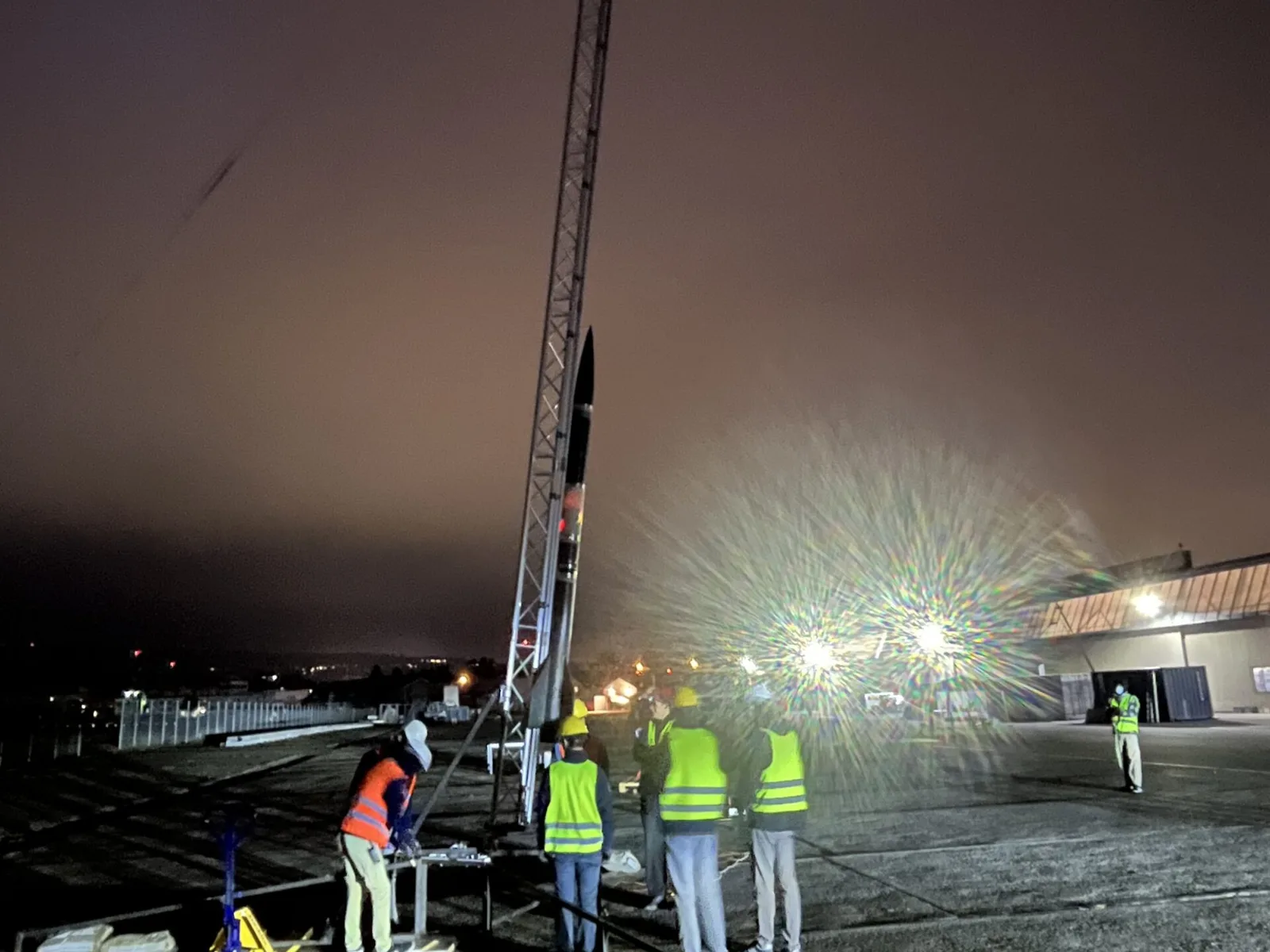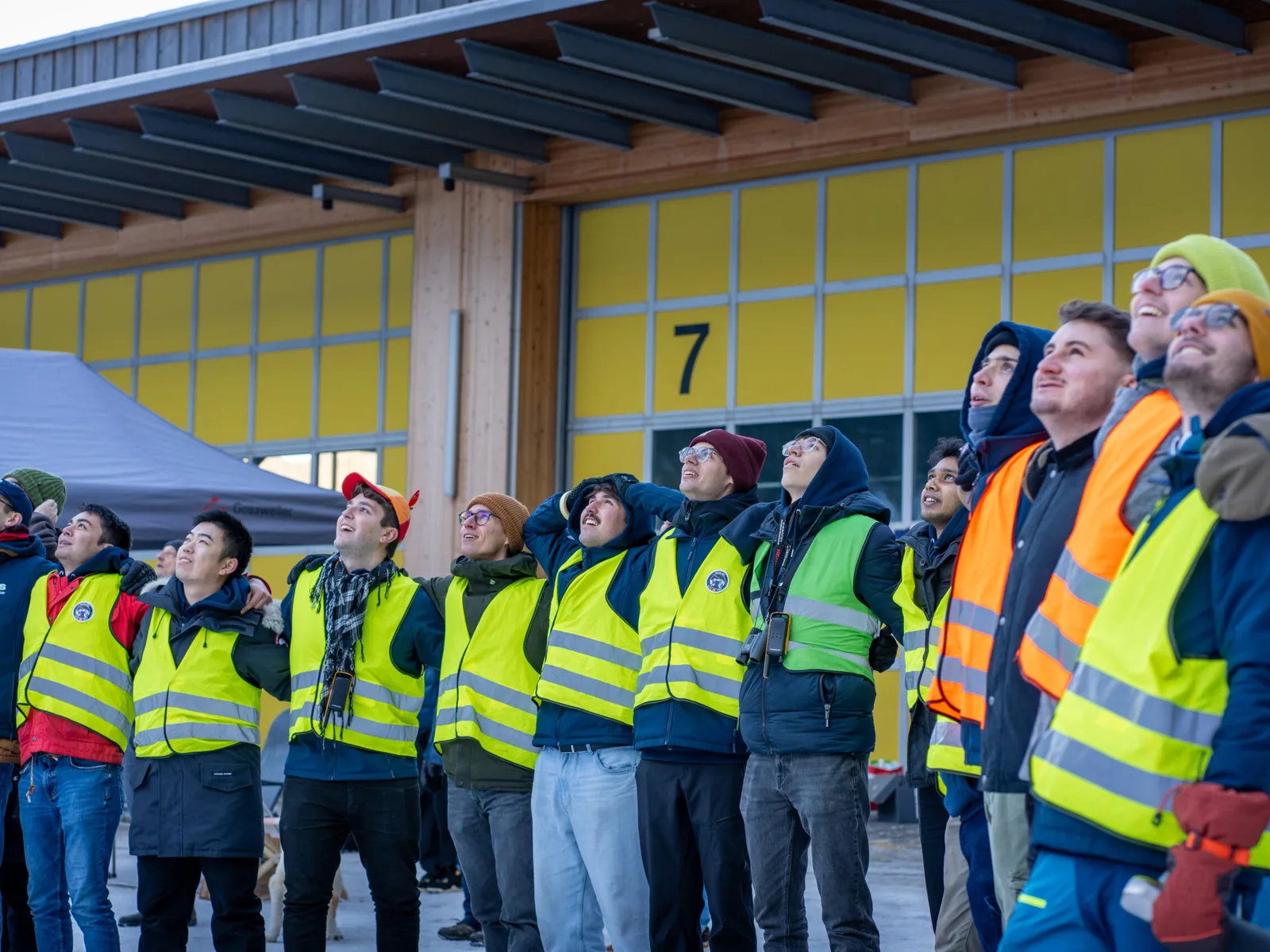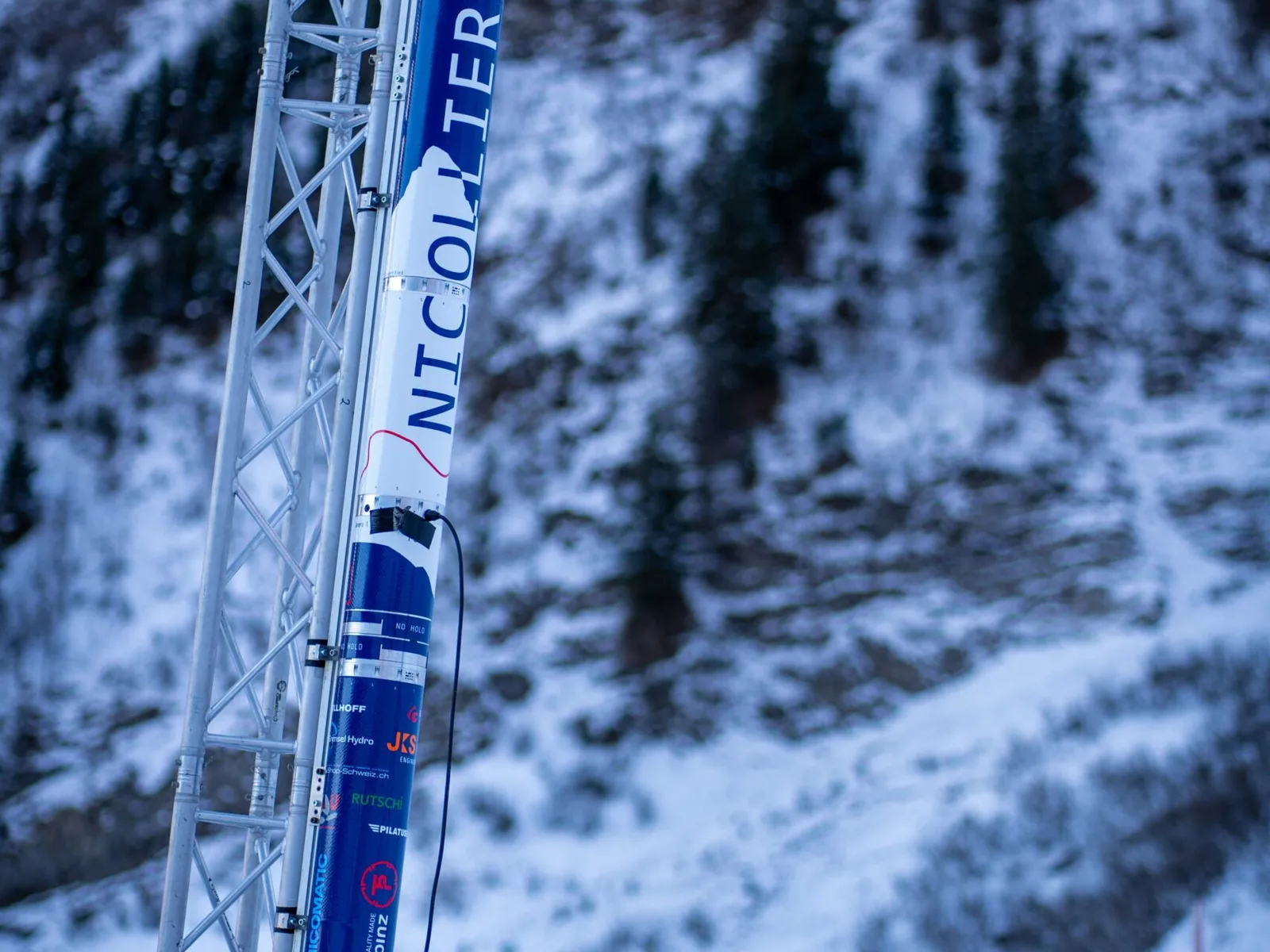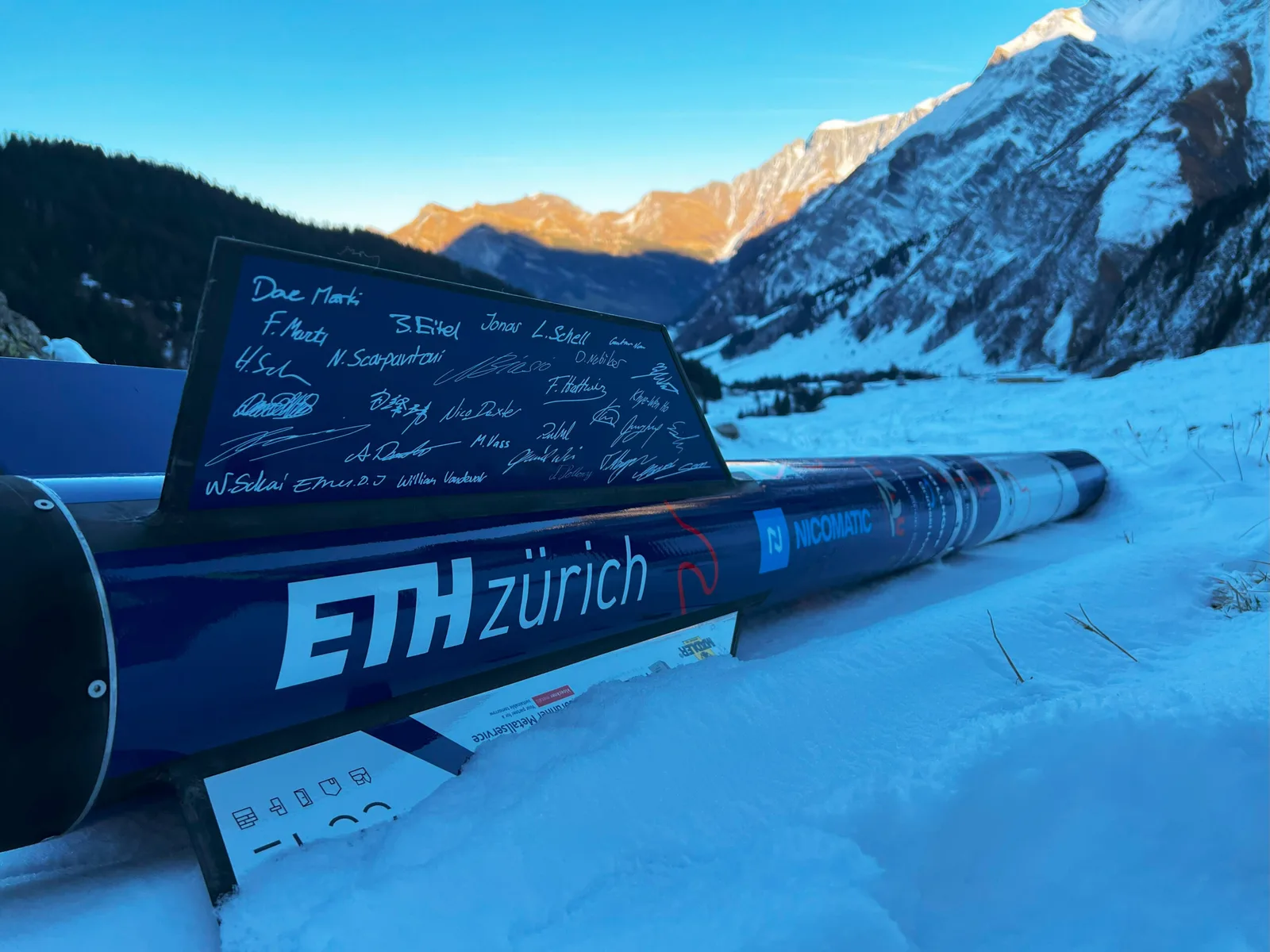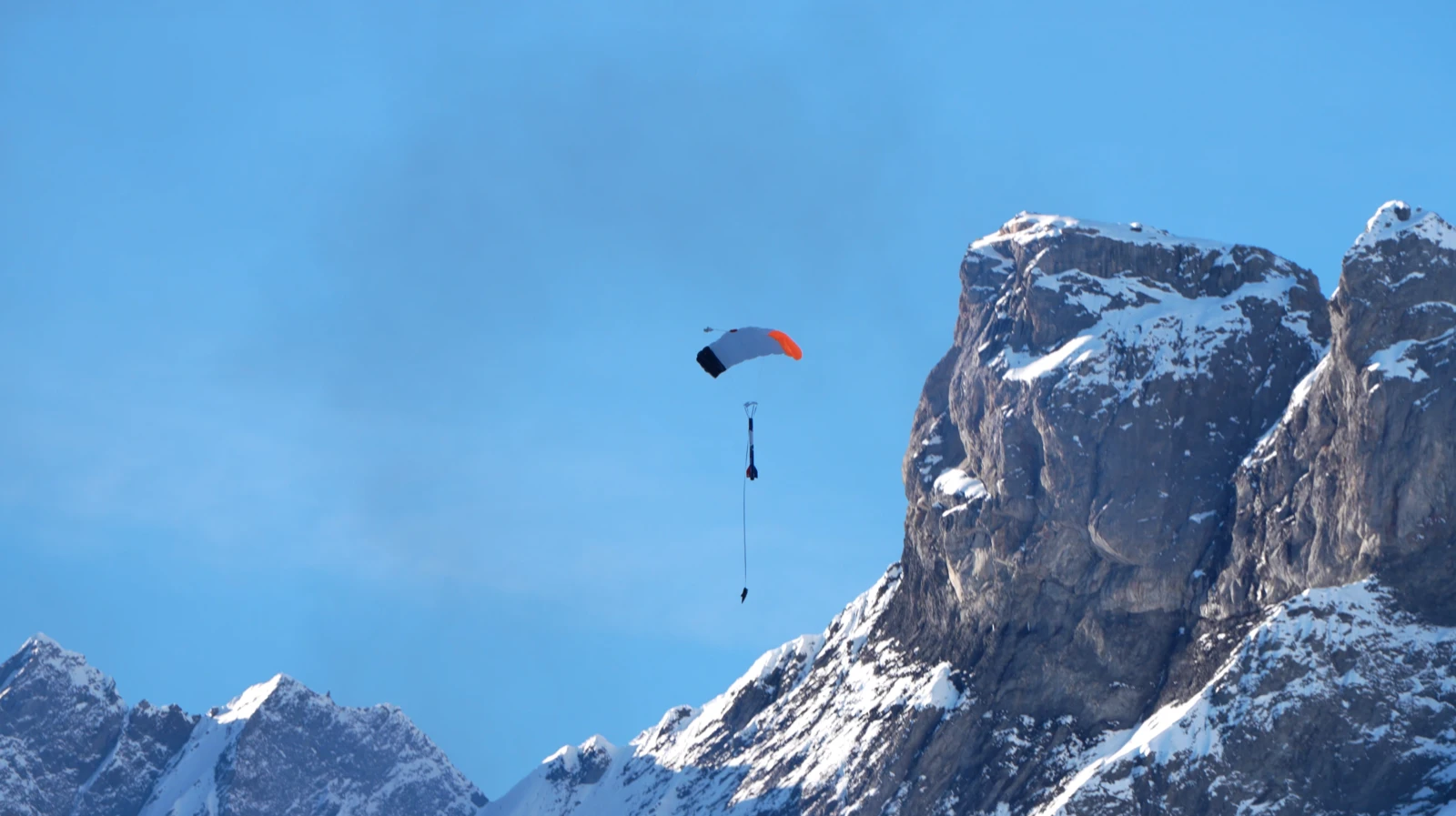
Project NICOLLIER was ARIS’s 2023/24 rocket project. A 3.7 m solid-motor sounding rocket, built by a team of 43 students, with one central goal: autonomous guided parafoil recovery. Rather than descending passively under a parachute, NICOLLIER was designed to actively steer itself back to a target landing point using a ram-air parafoil. On our second launch the rocket landed 6.54 m from its target, a world first in student rocketry. The video below is from that flight.
I joined NICOLLIER at its inception as one of two systems engineers. My mandate was to help ensure the project came together technically, defining the system architecture, managing interfaces across subsystems, and keeping recovery, avionics, and operations aligned. I was also flight director for both launches.
This was my first large-scale engineering project. I had just finished my second semester at ETH and was itching for an engineering project to join. I found a home at the Akademische Raumfahrt Initiative Schweiz (ARIS), among many similarly ambitious engineers. Over the next two years, ARIS ended up becoming a large part of my uni life.
Beyond systems engineering I wrote large portions of the embedded firmware, coordinated firmware development as a whole, and assisted on the GNC software (f.ex. putting together the GNC Monte Carlo simulation harness). NICOLLIER was also where I pushed for Rust-first across all systems. The idea of trying it on the embedded side too came from our avionics tech lead (who had heard of it but did not really know what it would involve); I said yes, took it on, and ended up being the one who pushed it through. That kicked off the embedded Rust work I’ve been doing at ARIS ever since.
We flew NICOLLIER twice in November 2024, both from Wichlen in Glarus, a little over a year after the project was initiated in September 2023.
The first flight on November 16 hit a max speed of 414 km/h and apogee at 1,015 m. The recovery sequence did not fully work: the drogue chute deployment tangled the main chute lines and meant the main never fully deployed. The rocket still landed softly on a snow-covered hillside. We diagnosed the issue, patched the recovery system, and came back two weeks later for another go.
On the second flight, November 30, we nailed it. Apogee at 995.6 m, parafoil deployed cleanly, GNC took over, and the rocket steered itself to a landing 6.54 m from the target. ARIS had been chasing guided recovery for four years before us. Eighteen helicopter drop tests, three rocket launches, multiple teams. In the end, all it took was starting from scratch.